Band & scroll saws / Tool comparison
Scroll saw vs. band saw: which fits your projects?
Match the saw to the cuts you actually make: fine internal details or larger curves.
Read the guide : Scroll saw vs. band saw: which fits your projects?Understand cutting capacity, power, and the work a portable band saw is built for.
A buying guide based on manufacturer information and project requirements, not a comparative hands-on test. Product details checked September 7, 2026.
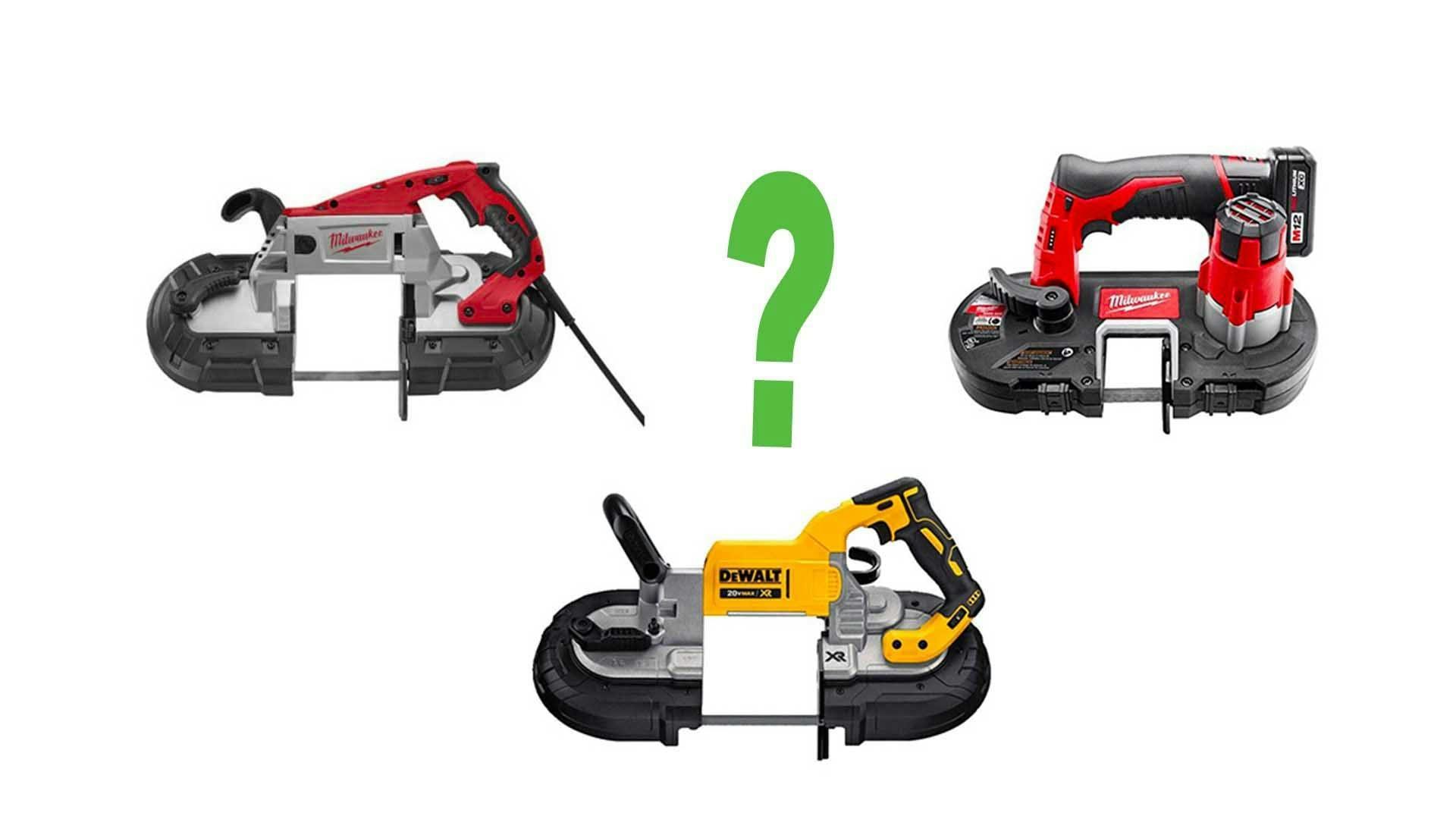
A portable band saw is useful for bringing the saw to supported stock, commonly for cutting metal sections such as pipe or bar with an appropriate blade. It fills a different role from a woodworking band saw with a fixed table. Start with the material, stock size and working position you need before shopping by battery brand.
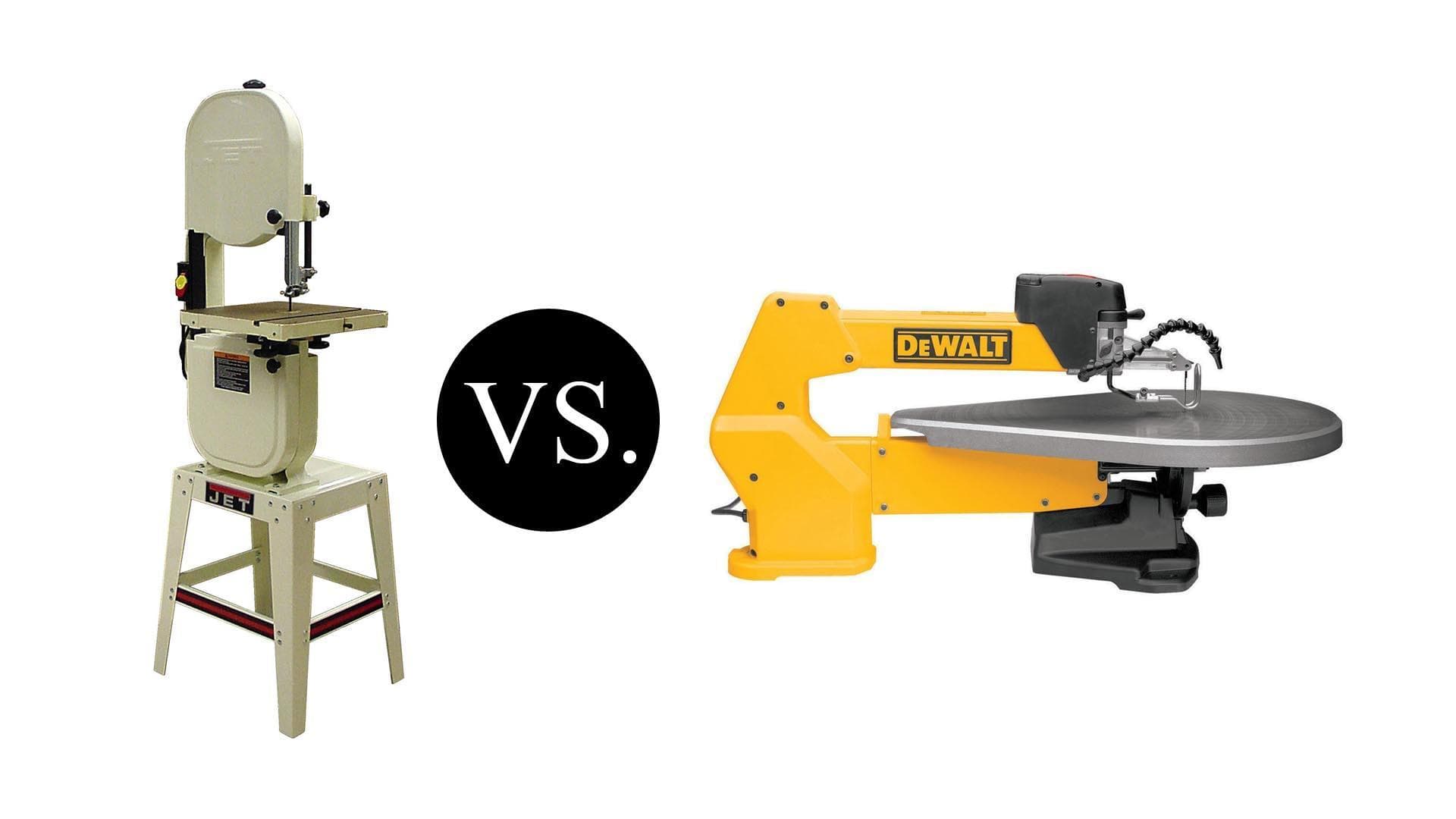
If you want to follow curves in wooden boards, resaw stock or guide small pieces on a table, investigate a stationary woodworking band saw. A handheld portable model is not a direct substitute. Its compact frame and cutting opening favor a different set of jobs.
If you mainly need detailed internal cutouts, a scroll saw may be the better category again. Our scroll saw versus band saw guide explains that distinction.
Check the manufacturer’s capacity for both the shape and orientation of your stock. A single headline opening dimension does not establish every rectangular or angled-cut capacity. Allow room for the machine, your hands and the intended cutting path around the secured work.
A smaller saw may be easier to move and hold in the positions your work demands. A deep-cut model can accept larger stock but takes more storage space and may be harder to handle. Compare the complete tool weight, including the battery you intend to use.
Corded models avoid battery charging and can suit repeated work near an outlet. Cordless models remove a trailing power lead and may be useful when moving around a job. Neither power source settles the capacity or suitability question.
For cordless models, price the battery and charger if you do not already own compatible ones. “Tool only” usually means they are separate purchases. Compare the intended battery platform, not just the nominal voltage printed on the tool.
The DEWALT DCS374B is a cordless deep-cut model sold as a bare tool. DEWALT lists it for the 20V MAX platform and identifies the battery and charger as separate. Its manufacturer page is a starting point for checking the exact dimensions, blade requirements and current manual.
This is a category example, not a comparative test winner. Before choosing it or another model, compare handling, workpiece capacity and the total kit price for your intended use. Do not assume a different model in the same brand has the same opening or blade length.
Use the blade length, width and other specifications required by the saw. Match tooth selection and speed to the material using the blade and tool instructions; one tooth count is not suitable for every thin tube and solid bar. Confirm that replacement blades are readily available before choosing an unusual size.
Secure the work with appropriate support and keep the offcut from trapping the blade. Follow the saw’s prescribed hand positions and guarding instructions. Stop and disconnect the power source before changing blades or clearing a jam.
An accessory table or stand must explicitly support the exact saw and intended operation. Check how it mounts, retains guarding and permits safe switching. A compatible-looking bracket alone does not establish an approved stationary setup.
If most of your work requires a table, compare a purpose-built stationary saw before buying a handheld saw and conversion accessories. A clear match between the tool and your work is more useful than collecting overlapping capabilities.
Match the saw to the cuts you actually make: fine internal details or larger curves.
Read the guide : Scroll saw vs. band saw: which fits your projects?Fence quality, capacity, stands, and the trade-offs behind a $500 saw budget.
Read the guide : Buying a table saw with a $500 budgetStart with compatibility, then choose for the material and cut you make most often.
Read the guide : Choosing a blade for the Bosch 4100